The Big Picture: For families navigating early-onset dementia, the "identity gap", the moment an individual forgets a detail of their own life, is quietly devastating.
Improvise is an evidence-led digital experience built on the scientific link between eye movement and memory retrieval. By utilising AI to implement fluid motion into static family photos, the platform kickstarts memory reconstruction without the anxiety of a clinical memory test.
Improvise is an evidence-led digital experience built on the scientific link between eye movement and memory retrieval. By utilising AI to implement fluid motion into static family photos, the platform kickstarts memory reconstruction without the anxiety of a clinical memory test.
📌 The Core Problem Statement
"How might I reconnect individuals experiencing memory loss with their personal history while stripping away the mental load for the carer?"
👥 Researched User Personas & The Core Tension
The biggest challenge of this product was balancing a dual-user ecosystem: designing an interface that feels like relief for an exhausted caregiver, and magic for a cognitively strained elder user .
1. The Caregiver (e.g., Sarah, 48)
The Reality: Electronically savvy but emotionally exhausted, dealing with decision fatigue and a relentless cycle of repetitive questions .
The Friction: If onboarding takes too long or feels like another chore on an overwhelming to-do list, it will be abandoned .
2. The Elder User (Age 70+)
The Reality: Navigating memory loss and experiencing cognitive friction .
The Friction: They often feel attacked, patronised, or ashamed when corrected on their reality . They need enrichment that respects their adulthood, not a test they can fail .
⚠️ The Design Constraint: Managing AI Hallucinations
Caregivers heavily fear the "uncanny valley"—an AI-generated version of a loved one that looks or sounds fake . The AI had to stay strictly honest to the original photo . The interface had to design trust into every interaction by prompting for real, defining human traits (e.g., "He jingled coins in his pocket" or "Always sharply dressed") to keep the motion authentic .
🛠️ The End-to-End Design Process
1. Discovery & Ideation
I originally explored multiple touchpoints to bridge the communication gap, analyzing hardware and software spaces :
HomePod AI Assistant: A friendly voice-commanded companion .
Digital Photo Frame: A familiar, nostalgic, and portable way to display memories .
Guided Storytelling Prompts: Replacing intimidating, empty upload boxes with AI-assisted prompt cards to eliminate decision fatigue for the caregiver .
2. Onboarding for Connection (Humanising Care)
Inspired by the whiteboard I designed for my father in hospice to ensure nurses saw the person, not just the patient, I built a specialized onboarding flow . By prompting users for specific physical gestures, posture, and signature habits, the platform captures the tiny details that define a human being, allowing care staff to instantly bond with them over their real history .
3. Usability Testing & Iteration
I ran comprehensive usability tests with real users to challenge my initial concepts .
What Worked: 100% of testers immediately understood the platform's purpose . They praised the clear ethical stance regarding AI, and loved the nostalgic aesthetic created by the soft colours and serif typography .
What Stalled: Users hesitated at non-linear onboarding steps and found technical, clinical language emotionally cold . Empty AI prompt fields also caused friction .
The Iterations: * Rebuilt the signup journey into a highly predictable, linear, step-by-step flow .
Warmed up the UI copy, entirely removing medical/technical jargon .
Restructured the Information Architecture (IA) to a left-aligned navigation bar to align with strict industry standards and ease scannability .
🏆 Accolades & Impact
75–90% user success rate achieved on core navigation and platform tasks.
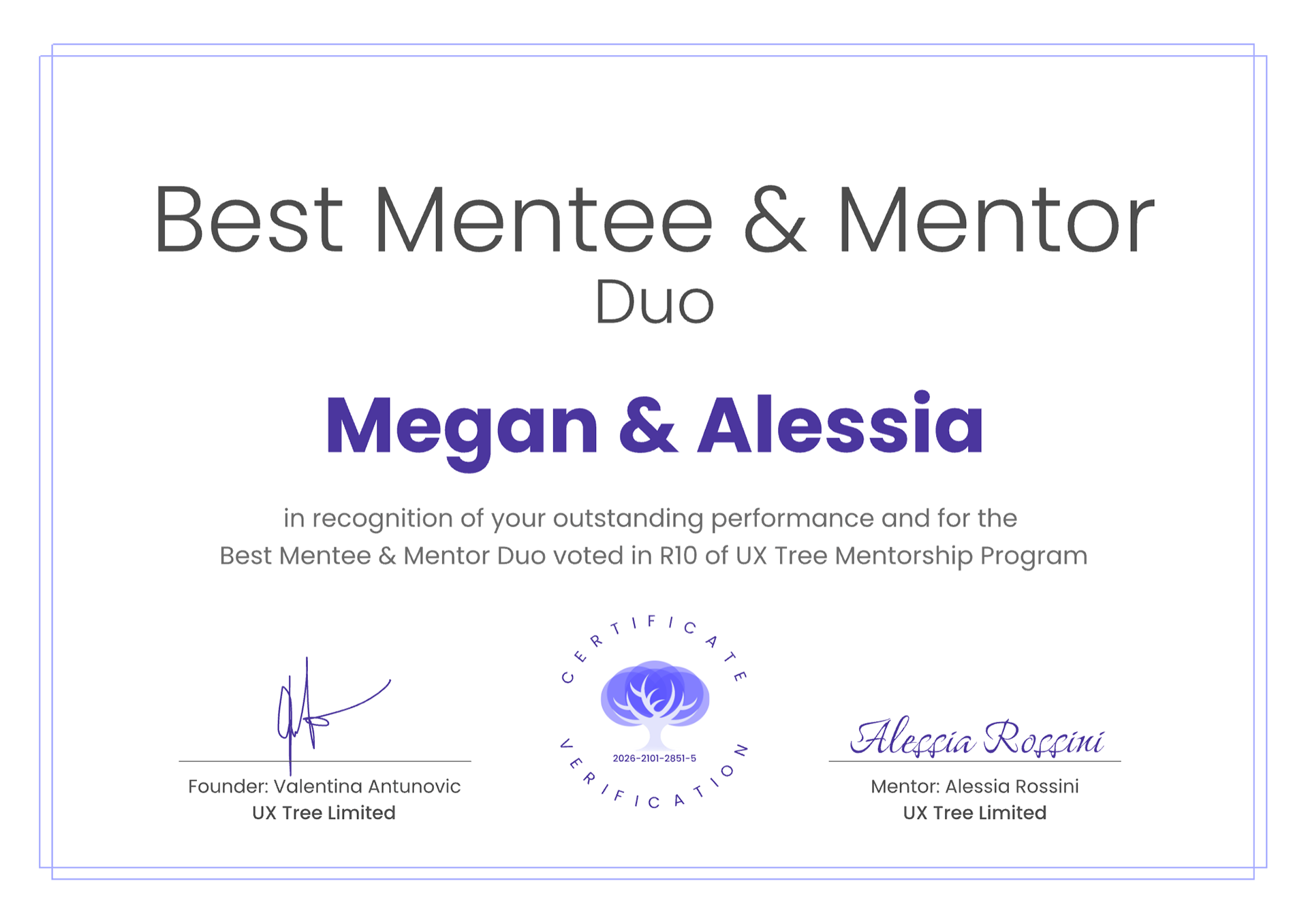
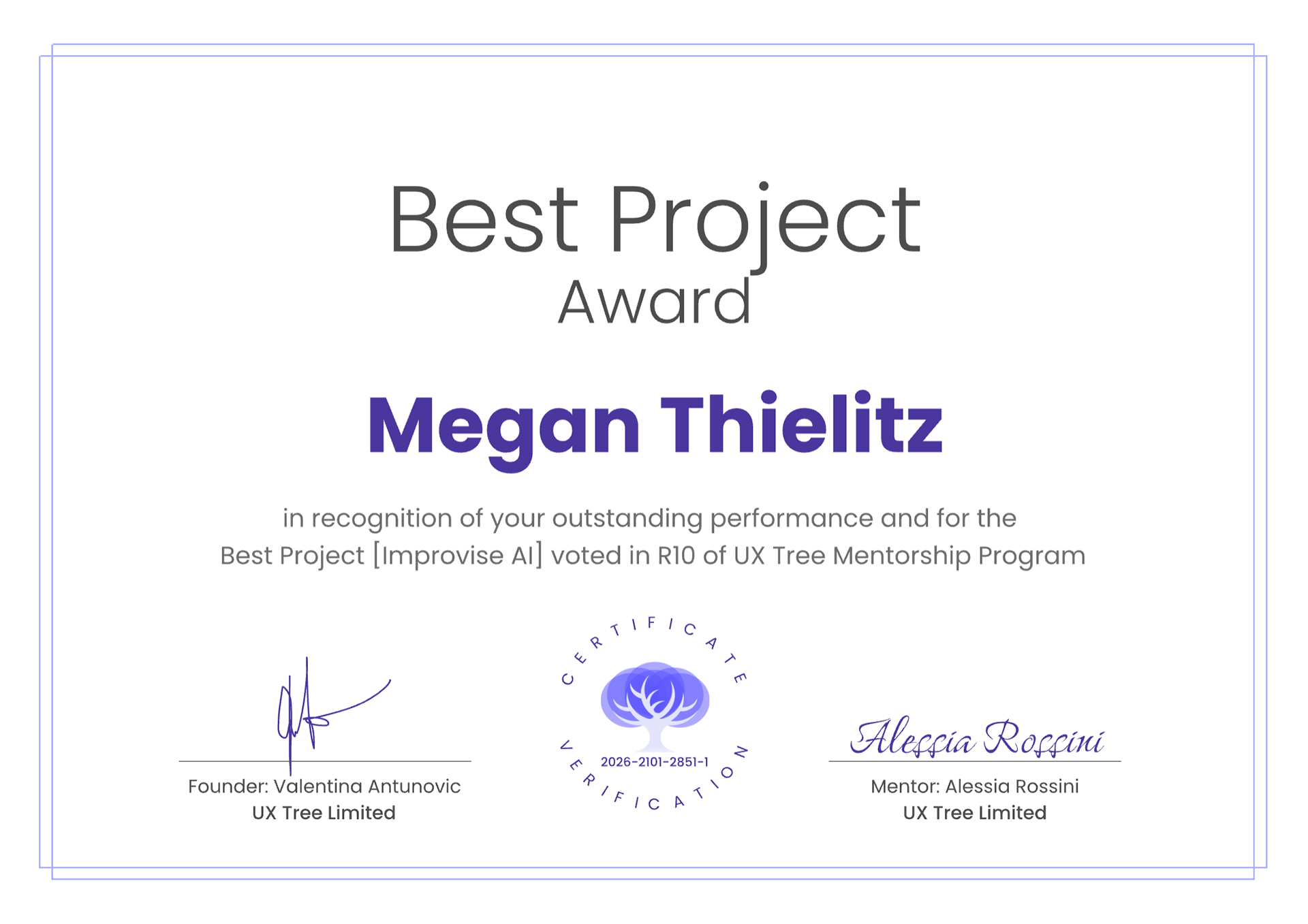
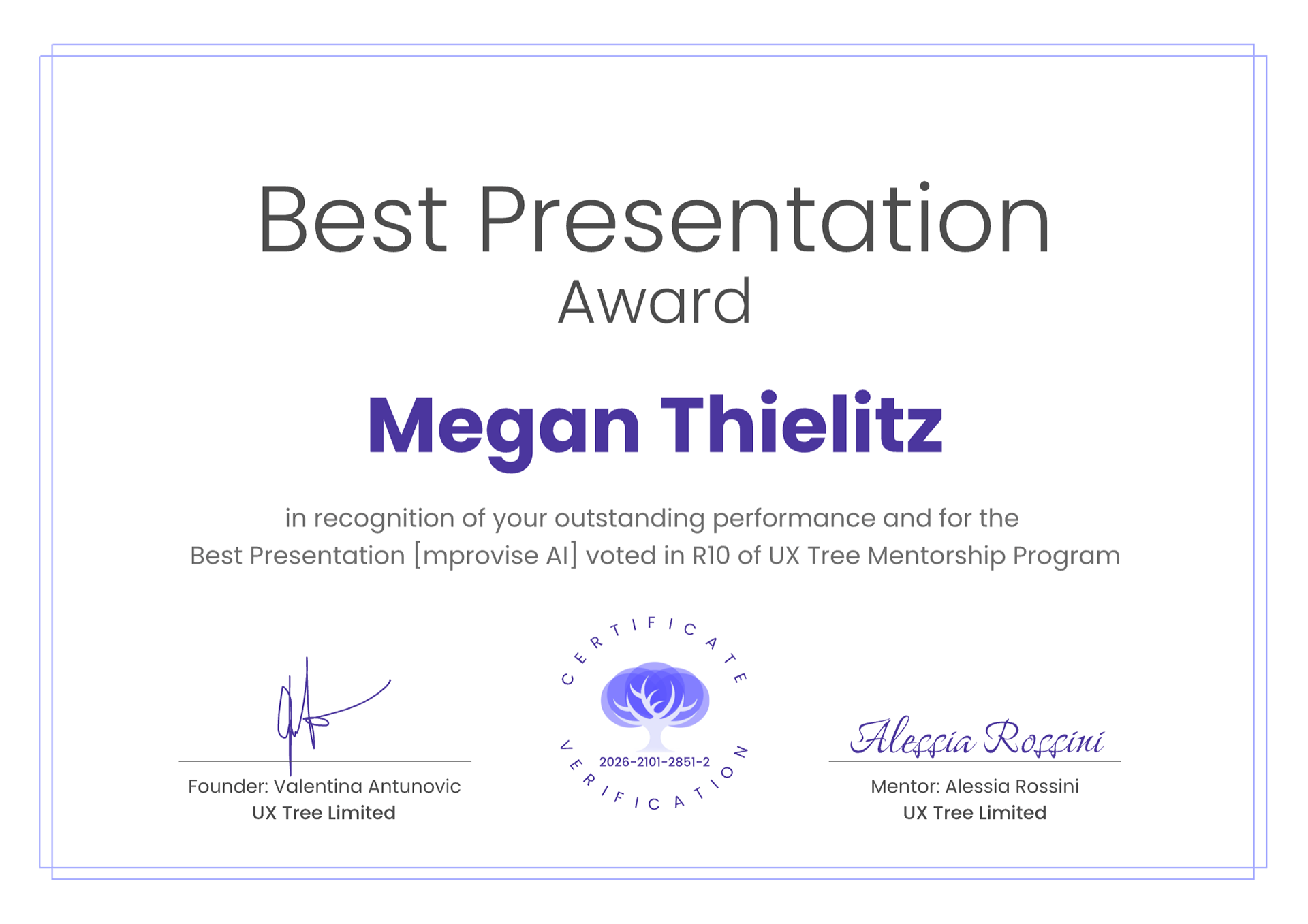
Recognized with 3 out of 4 Graduate Programme Awards at the UX Tree Mentorship.
[Insert Image/Screenshot of Awards Here]
Why this text works perfectly for your portfolio:
It immediately highlights the scientific/data backup (eye movement study), showing you don't just design things because they look pretty .
It handles a highly complex technical issue (AI hallucination) with a UX solution (trait prompting), which directly hits Salesforce's desire for "AI-powered workflows" .
The transition from "Clinical Language" to "Warmer Interface Copy" shows you understand content strategy and microcopy .